High School Character: A Designer’s Real-World Embroidery Review
As someone who’s stitched hundreds of custom pieces—from boutique aprons to Etsy baby onesies—I opened High School Character expecting a playful, nostalgic illustration. What I found was something more nuanced: a clean, expressive avatar-style graphic that leans into youthful energy without tipping into clutter or cliché. It’s not just “cute”—it’s usable. And that makes all the difference when you’re choosing embroidery files for real projects.
First Impressions: Personality Over Precision
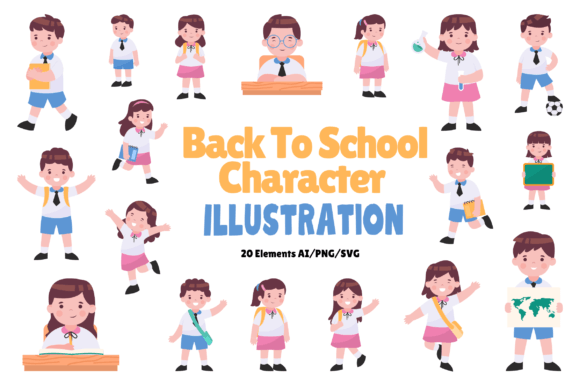
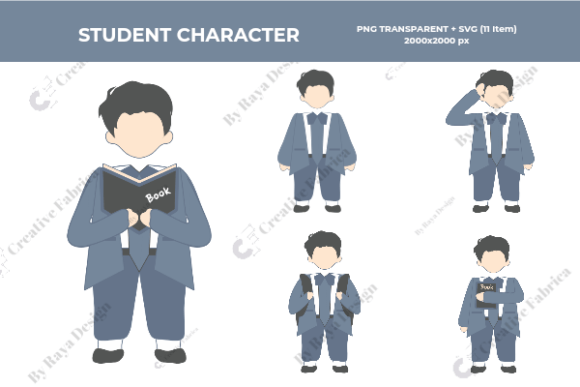
The High School Character design lands with warmth and approachability. Its silhouette is balanced—not too angular, not too soft—and the facial expression reads friendly but focused, like a student mid-laugh or leaning in during group work. There’s no heavy linework or tight detail; instead, it relies on thoughtful negative space and gentle curves. That’s good news for embroidery: less risk of thread buildup, better readability at smaller scales, and natural adaptability across fabric types.
I immediately pictured it on a lightweight cotton tote bag—say, a graduation gift for a senior. Not as a tiny corner accent, but centered on the front panel, roughly 4” wide. In my head, it stitched cleanly: satin-stitched outlines for definition, open fill areas for breathability, and no fussy interior details that would vanish under thread. That mental test? It passed.
Where It Shines (and Where It Needs Care)
High School Character works best where personality matters more than photorealism—custom apparel for school spirit days, embroidered patches for club jackets, or pillow covers for teen bedrooms. On sweatshirts, it holds up well because its proportions scale naturally: the head-to-body ratio stays legible even when resized to 3.5”. On baby onesies? Yes—but only if you keep the final stitch size above 2.75”. Below that, the subtle shaping around the eyes and mouth starts to blur.
It’s also strong as a digital design asset. The included SVG and PNG transparent files let me drop it into mockups instantly—no background cleanup needed. For Etsy sellers building printable listings or small shop owners prepping social media banners, that transparency saves real time. As an illustration, it bridges digital and physical beautifully: use it as a sticker sheet graphic, then translate it directly to a stitched patch or tea towel design.
But here’s where attention matters: High School Character isn’t built for ultra-fine detail work. Don’t push it onto curved surfaces like baseball caps without testing hoop placement first—it has a flat, frontal composition, so distortion can happen near the crown seam. Also avoid dense stitch overlays on stretchy knits unless you pair it with cutaway stabilizer. And on dark fabrics? Run a quick black-and-white mockup. The contrast between light skin tones and darker backgrounds needs intentional thread color choices—not just default neutrals.
Real Project Test: A Graduation Tote Bag Series
Last week, I used High School Character as the centerpiece for a limited run of graduation totes. Fabric: medium-weight canvas. Hoop size: 5” x 7”. Stabilizer: medium tear-away + light cutaway backing. Thread: matte poly in navy, cream, and charcoal for depth.
The result? Clean, confident, and unmistakably handmade. Customers didn’t just recognize the theme—they commented on how “real” it felt. Not cartoonish, not stiff. That’s the quiet strength of this design: it invites connection without demanding attention.
What didn’t work? Trying to shrink it below 3” on a thin linen tea towel. The hairline detail softened too much, and the face lost its spark. Lesson learned: know your minimum viable size before cutting fabric.
Design Integrity Meets Commercial Reality
For craft business owners and Etsy sellers, High School Character supports brand consistency without locking you into one aesthetic. It fits equally well in a minimalist nursery line (paired with soft grays and oatmeal threads) or a bold back-to-school collection (with high-contrast neon accents). That flexibility boosts perceived value—customers see thoughtfulness, not repetition.
It also builds trust. When a buyer orders a personalized gift and receives a finished product where every curve stitches crisply and nothing looks rushed or pixelated, they remember that craftsmanship. That’s how repeat sales happen—not from flashy claims, but from consistent, confident execution.
Practical Designer Notes Before You Stitch
- Always test High School Character on scrap fabric first—especially if using textured weaves like burlap or terry cloth.
- Check stitch density in the file preview. If it’s heavy in the face area, consider simplifying or reducing fill density manually.
- Confirm hoop size compatibility. This isn’t a 1”-hoop design—it needs breathing room to land right.
- Inspect corners and curves in your embroidery software. Look for any unintentional overlaps or gaps in the vector path.
- Try black-and-white and grayscale mockups. Does the shape still read clearly? That tells you how well it’ll translate across fabric colors.
- Use proper stabilizer—especially for lightweight or loosely woven fabrics. This design’s openness means it won’t hide poor backing.
- Verify licensing terms before selling finished items or digital products. Since it’s categorized as Illustrations and Graphics, commercial use may require attribution or a separate license—check the source.
Bottom line? High School Character isn’t just another avatar. It’s a quietly versatile embroidery file that earns its place in your working library—not because it’s trendy, but because it stitches well, sells honestly, and feels human. Whether you’re stitching for a client, stocking a craft fair table, or building a digital product bundle, it’s the kind of design that works *with* you—not against your machine, your timeline, or your standards.