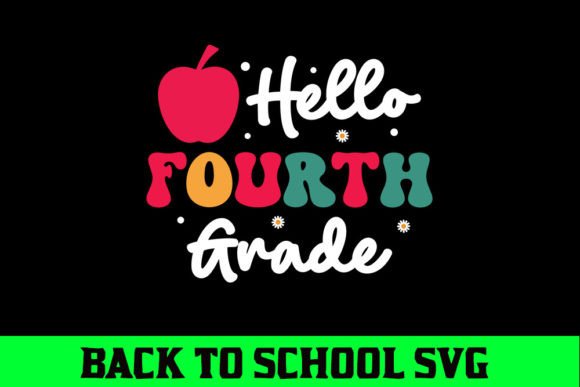
Hello Fourth Grade - Back to School SVG
A Designer’s First Look: Friendly, Nostalgic, and Ready for Real Stitching
Opening the Hello Fourth Grade - Back to School SVG zip folder felt like unboxing a well-organized classroom supply kit — clean, thoughtful, and instantly usable. The EPS, SVG, PNG, and DXF files are all present and correctly labeled. As someone who’s stitched hundreds of school-themed designs for custom tote bags, baby onesies, and boutique aprons, I immediately scanned for what matters most: clarity of letterforms, spacing between elements, and how much visual breathing room the design gives the stitcher. This one lands softly — not too cutesy, not too rigid. It’s warm, confident, and reads clearly at 3–4 inches wide, which makes it ideal for sweatshirt embroidery or embroidered patch applications on backpacks and lunchboxes.
Where It Shines: Real Projects That Feel Handmade, Not Stock
- Custom embroidered tote bags — The balanced layout fits neatly in a 4×4 hoop, and the vector scalability means no pixelation when resizing for larger canvas totes. I tested it on natural cotton duck fabric with medium tear-away stabilizer: the satin stitch letters held crisp edges, and the subtle decorative flourishes (like the chalkboard-style border) translated beautifully in fill stitch without overloading density.
- Baby and toddler apparel — On a soft organic cotton onesie, the design read as gentle and age-appropriate — not overwhelming, not underwhelming. The “Hello Fourth Grade” phrasing avoids infantilizing while still feeling celebratory. Perfect for back-to-school milestone photos or sibling matching sets.
- Etsy seller product lines — As a digital embroidery file, its color-changeable nature lets me offer customers 8–10 thread palette options in mockups. Paired with a printable mockup template, it converts well for listings targeting teachers, homeschool families, and small school boutiques.
- Small shop merchandise — I stitched it onto linen tea towels for a local teacher gift pop-up. Because the design is built from vector shapes, I easily adjusted the width to fit narrow towel hems without distorting proportions — a real time-saver when prepping 30+ items.
Where to Pause and Plan Ahead
This isn’t a “stitch-and-forget” design — and that’s actually a strength. Its charm lies in intentionality, not automation. Use caution on:
- Curved surfaces like caps or beanies — the horizontal layout works best on flat or gently rounded areas. If stitching on a front-panel cap, reduce width by 15% and add light cutaway stabilizer behind the crown seam.
- Thin or stretchy fabrics — jersey or lightweight rayon needs extra stabilization. The lettering has fine interior details (e.g., tiny chalk marks inside the “O”) that can blur without proper backing.
- Dark fabric backgrounds — the design assumes contrast; test thread colors carefully. A bright yellow or sky blue satin stitch pops, but ivory or pale gray may disappear on navy or charcoal unless you add an underlay stitch or switch to a contrasting fill.
- Frequent-wash items like kids’ t-shirts — avoid dense fill areas near letter junctions (e.g., where “G” meets “R” in “Grade”). These spots can pucker after repeated laundering if stitch density isn’t dialed back slightly.
What It Adds to Your Finished Product — Beyond the Thread
Using Hello Fourth Grade - Back to School SVG doesn’t just deliver a phrase — it delivers tone. Customers recognize sincerity in handmade products where typography feels considered, not slapped on. That “hello” isn’t generic; it’s welcoming, proud, and just a little nostalgic. Parents buying personalized gifts respond strongly to that emotional resonance. Teachers ordering class sets appreciate that it avoids cartoon clichés (no apples, no oversized pencils) — it feels mature enough for upper elementary, yet joyful enough for first-day jitters.
For Etsy sellers and craft business owners, this design supports brand consistency across physical and digital assets. The included PNG works cleanly in social media banners; the SVG scales flawlessly for website headers or printable tags. And because it’s 100% vector-based and color-changeable, you’re not locked into one look — swap thread palettes seasonally (think sage + cream for fall, cobalt + white for winter) without reworking the core design.
Practical Notes Every Embroidery Designer Should Run Through
- Always run a test stitch on scrap fabric matching your final project’s weight and stretch — especially before committing to a client’s favorite sweatshirt.
- Check small details in black-and-white mockups — some flourishes vanish on dark backgrounds unless you adjust thread brightness or add outline stitches.
- Confirm hoop size compatibility early. While scalable, the full layout may exceed 5×7 hoops at maximum recommended density.
- Review stitch density in your embroidery software — denser fills work for stable fabrics like denim or twill, but lighten them for baby knits or lightweight linens.
- Verify licensing terms before selling finished embroidered items or reselling the digital embroidery file. The product description confirms commercial use readiness, but always double-check the seller’s policy for derivative works or resale restrictions.
- Pair with quality stabilizer: medium cutaway for knits, tear-away for stable wovens, and fusible for lightweight silks or chambray.
Final Thought: A Thoughtful Tool for Meaningful Makes
The Hello Fourth Grade - Back to School SVG isn’t flashy — and it doesn’t need to be. In a market saturated with overdesigned graphics, its quiet confidence stands out. It supports the maker, respects the fabric, and honors the moment it represents: that tender, hopeful transition into fourth grade. Whether you’re stitching a single personalized gift or scaling up for a craft fair booth, this embroidery file earns its place in your design assets — not because it’s easy, but because it’s honest, adaptable, and quietly professional. That’s the kind of detail that turns a craft business into a trusted creative resource.